
Why Is Medicai the Best for Image Sharing Platform?
A social history of care within households: assumed for centuries, discussed publicly only recently.
Many hospitals still move scans between locations by shipping disks or emailing links that expire. The result is delayed reports and repeated imaging when files fail to open. Medicai replaces those steps with one cloud workspace that loads studies instantly for any connected team.
By the end of this article you will know how the platform handles retrieval, storage, and viewing in one place, what plans fit different hospital sizes, and which security checks have already been passed. You will also see the exact staff roles that gain the most from switching.
What Is Medicai?
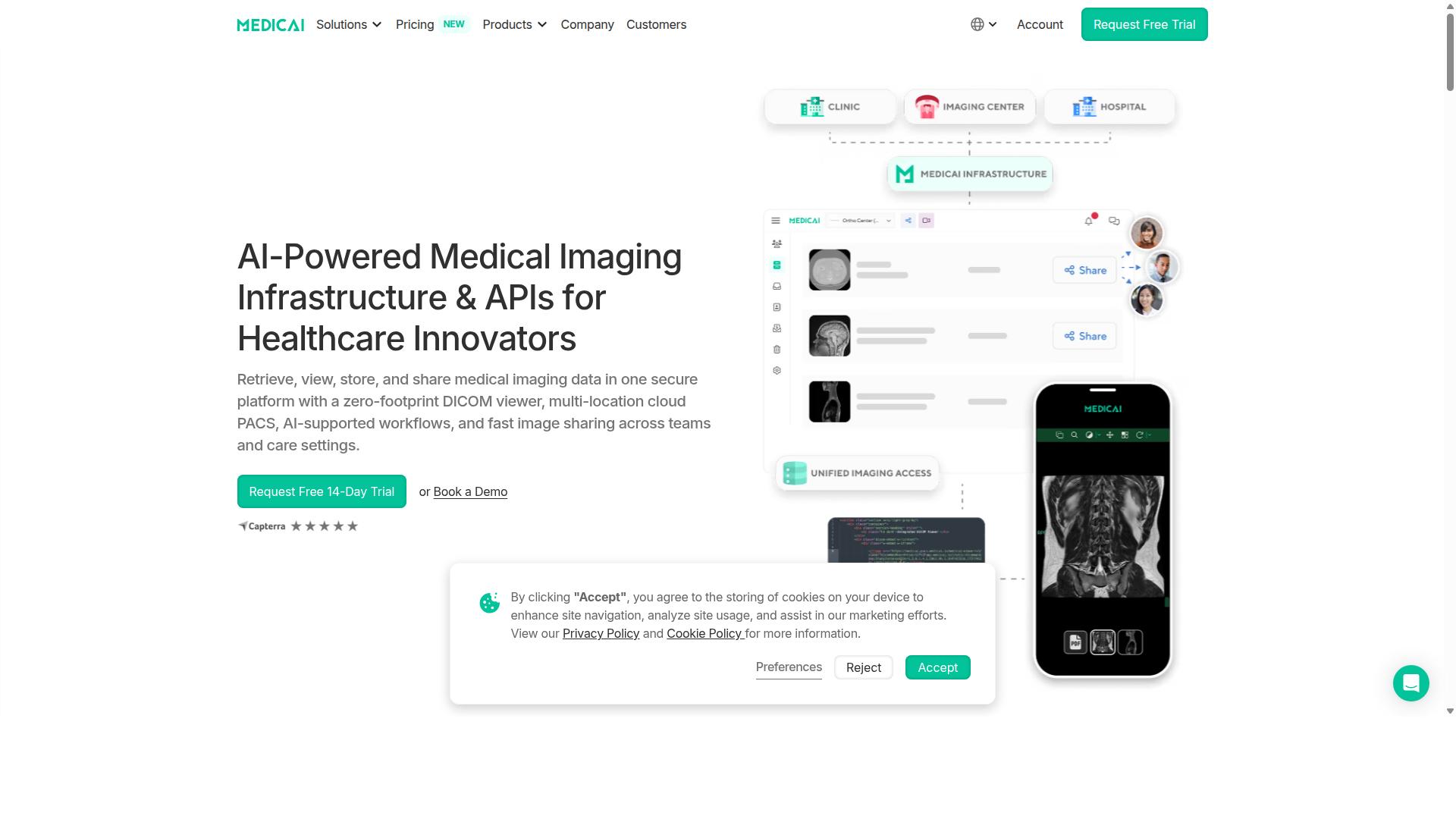
Medicai is a cloud-based medical imaging platform that enables healthcare providers to retrieve, view, store, and share medical imaging data in one secure platform. The solution delivers Imaging Infrastructure as a Service through a centralized system that connects multiple care settings and teams.
The platform features a zero-footprint DICOM viewer that requires no local installation. This approach allows immediate access to diagnostic imaging across different devices and locations without additional software downloads.
Healthcare providers benefit from multi-location cloud PACS capabilities that support image storage and retrieval. The system maintains HIPAA compliance and GDPR compliance standards for protected health information management.
AI-supported workflows enhance efficiency across radiology departments and other clinical specialties. The platform enables fast image sharing between referring physicians, specialists, and care teams within secure environments.
Medical facilities use Medicai to modernize traditional imaging workflows while maintaining interoperability standards. The VC-backed healthcare startup focuses on creating connected systems that support diagnostic imaging across hospital networks and outpatient settings.
Why Medicai Is the Best for Image Sharing
Medicai outperforms traditional image sharing methods by combining security, speed, and interoperability across hospital systems worldwide.
Legacy approaches rely on physical media or unsecure email, both of which expose patient data and create delays. Encrypted, bandwidth-optimized transfer eliminates these risks and speeds up delivery between facilities.
Research suggests that physical media still travels between departments in many hospitals. This adds days to workflows and leaves no record of access or modification.
Medicai processes over 1M studies each year. The platform stores 1.7M studies and supports 300k visualizations completed in the last year alone.
Doctors can access images from any device without installing software. Cross-platform access works on Windows, Mac, iOS, and Android through a browser-based viewer.
The service follows HIPAA and GDPR rules. It meets FDA and CEE clearance standards while applying OWASP security guidelines to every interaction.
Seventy clinics and hospitals already connect to the platform. Over 10,000 active doctors use it daily for secure image exchange.
Two million imaging studies have been uploaded since launch. The system handles 50M API transactions each year without performance drops.
Cloud architecture removes the need for on-site servers. Hospitals avoid hardware costs while still meeting strict data residency rules.
Microsoft Azure partnership ensures high availability and automatic scaling during peak demand. Data centers meet international compliance standards.
Referring physicians receive instant notifications when new studies arrive. They can review images without leaving their own EMR environment.
Global multidisciplinary tumor boards use the platform to review cases across borders. Ukrainian refugee patients have accessed cancer treatments through this network.
Traditional methods lack audit trails. Medicai records every view, download, and share action for compliance reporting.
Bandwidth optimization keeps large DICOM files moving quickly even on slower connections. Lossless compression maintains image quality while reducing transfer times.
Role-based access controls limit who can view or edit studies. Administrators set permissions without complex IT support.
The platform works with existing PACS and EMR systems. Integration uses standard HL7 and FHIR protocols already common in healthcare IT.
Diagnosis time drops by 65% when teams switch from physical media to this service. Faster access means patients receive treatment decisions sooner.
Zero-footprint viewers require no downloads or updates. Clinicians open studies from any location with an internet connection.
Real-time collaboration allows multiple specialists to view the same study simultaneously. Annotations appear instantly for all participants.
Three-dimensional reconstruction helps surgeons plan procedures before entering the operating room. Mobile access lets them review cases from anywhere.
Image annotation tools mark areas of interest without altering original files. These marks stay attached to the study for future reference.
Vendor neutral archive capabilities free hospitals from single-vendor lock-in. Studies move between systems without reformatting or manual conversion.
Workflow automation routes studies to the correct specialist based on modality and urgency. Staff spend less time sorting and forwarding files.
Encrypted transfer protects patient data during every step of movement. End-to-end encryption meets requirements for sensitive medical records.
AI integration opportunities exist through the open API. Developers can add analysis tools without rebuilding core infrastructure.
The platform serves radiology departments, oncology centers, and trauma units. Each group benefits from fast, secure access to diagnostic imaging.
Teleradiology practices rely on the service to read studies from remote locations. Radiologists review cases without traveling to hospital sites.
Patient data stays within controlled environments. Encryption at rest and in transit prevents unauthorized access even if storage systems are compromised.
Multi-specialty teams coordinate care across different facilities. Surgeons, oncologists, and radiologists review the same images without shipping discs.
Image archive features keep historical studies available for comparison. Previous exams load quickly when follow-up imaging arrives.
Cloud storage scales automatically as study volume grows. Hospitals avoid hardware purchases and maintenance contracts.
Interoperability standards ensure compatibility with equipment from different manufacturers. No single vendor controls access to stored data.
Secure transfer replaces courier services and mail. Studies reach their destination in minutes rather than days.
The combination of compliance, speed, and accessibility makes Medicai the clearest choice for modern medical image sharing needs.
Key Features and What Makes Medicai Stand Out
Medicai's feature set spans three capability pillars: connect-and-retrieve, store-and-manage, and access-visualize-collaborate.
These pillars address the full lifecycle of diagnostic imaging. Each one maps directly to daily pain points in hospitals, clinics, and teleradiology services.
Healthcare teams need reliable inbound connections, secure long-term archives, and instant access for every stakeholder. The following sections show how Medicai meets these needs with clearly defined tools.
Connect & Retrieve Capabilities
Two dedicated components streamline inbound imaging data: the Medical Imaging Uploader and the DICOM Gateway.
The Medical Imaging Uploader accepts CD-ROMs, USB drives, and network transfers from outside facilities. Studies arrive in native DICOM format and move into the receiving system without manual renaming or folder sorting.
The DICOM Gateway supports HL7 and FHIR queries. It pulls patient demographics and study identifiers directly from hospital information systems, then auto-maps those values into existing EMR records.
Both components reduce duplicate data entry and lower the risk of mismatched patient identifiers during the transfer process.
Store & Manage Infrastructure
Once ingested, all studies reside in a unified Cloud PACS with optional Vendor Neutral Archive and automated disaster recovery.
Storage options include a Starter tier at 500 GB and a Standard tier at 2 TB. Each tier provides scalable capacity for growing imaging volumes across multiple departments.
Automated backups run on a scheduled basis and replicate data to secondary sites. This setup supports disaster recovery and helps meet regulatory expectations for data retention.
Patient Case Management tools organize studies by specialty, episode, or care team. Multi-specialty workflows remain consistent whether the case involves radiology, oncology, or cardiology.
Access, Visualize & Collaborate Tools
Authorized users open studies instantly in a zero-footprint viewer supporting 3D reconstruction, annotation, and real-time multi-party collaboration.
The viewer works on desktop browsers, tablets, and mobile devices without additional installation. Cross-platform access allows referring physicians to review images during rounds or from remote locations.
Role-based permissions define who can view, annotate, or export studies. Audit trails record every action, supporting compliance reviews and internal governance policies.
Simultaneous session capabilities let multiple clinicians join the same study at once. Real-time collaboration speeds second opinions and reduces delays in care decisions.
Pricing and Plans
Medicai offers transparent monthly pricing tiers designed to scale with institutional imaging volumes. The platform provides clear cost structures that help radiology departments and healthcare organizations plan their technology investments without hidden fees.
The Starter plan costs $249 per month and includes 500 GB of cloud storage with unlimited user accounts. Organizations can connect zero external locations through this tier, making it suitable for smaller practices that need secure medical imaging access without complex infrastructure requirements.
The Standard plan is priced at $749 per month and provides 2 TB of cloud storage along with unlimited user accounts. This tier supports one connected location, allowing facilities to integrate their existing PACS or DICOM systems for seamless image sharing across departments.
Enterprise customers receive custom pricing based on their specific storage needs and connectivity requirements. This option accommodates multiple connected locations and external partnerships that larger hospital systems typically demand for comprehensive medical imaging workflows.
Yearly billing provides 15 percent savings compared to monthly payments. The Starter plan drops to $209 monthly when paid annually, while the Standard plan costs $639 per month with yearly commitment, helping organizations reduce ongoing operational expenses for their image sharing platform.
A DICOM Gateway setup fee of $1,000 applies per location for organizations requiring direct system integration. The platform includes a free 14-day trial of Starter plan features without requiring credit card information, allowing teams to evaluate the image sharing capabilities before making financial commitments.
Trust Signals
Security and compliance certifications provide the foundation for Medicai's enterprise adoption. Healthcare organizations handling sensitive medical imaging data require platforms that meet strict regulatory standards. HIPAA and GDPR compliance ensures patient information remains protected throughout every stage of the sharing process.
Role-based access controls give administrators precise management over who can view, edit, or distribute DICOM studies within their organization. These controls create clear boundaries between different user types. Encryption at rest and in transit protects data whether stored in the cloud archive or moving between hospital systems and referring physicians.
The FDA and CEE cleared viewers demonstrate that Medicai meets medical device standards for diagnostic use. OWASP security guidelines followed throughout development address common vulnerabilities in healthcare IT systems. These clearances signal that the platform can handle clinical workflows safely.
Seventy clinics and hospitals currently use Medicai to exchange medical imaging across specialties. Over ten thousand active doctors access the platform daily for patient care coordination. This adoption rate among established healthcare institutions reflects confidence in the security framework.
Partnership with Microsoft Azure provides additional infrastructure protections for medical records. Two million imaging studies have been uploaded and stored securely. Healthcare providers seeking an image sharing platform can rely on these trust markers when evaluating solutions for their diagnostic imaging needs.
Who Should Use Medicai
Any healthcare entity that routinely exchanges diagnostic imaging will benefit from Medicai's unified platform. Hospitals and imaging centers rely on fast, secure transfers when patients move between departments or external providers.
Specialty practices gain targeted value from this image sharing platform. Orthopedics, neurology, oncology, radiology, and cardiology departments handle complex studies that require precise detail and reliable delivery to referring physicians.
Virtual care providers and telemedicine platforms use Medicai to connect remote patients with specialists. Teleradiology services depend on the platform for rapid image routing across geographic regions without compromising quality or security.
Medical education organizations and clinical trials need consistent image access for training and research review. Tumor boards rely on the platform to bring together multiple specialists for case discussions.
Personal injury lawyers access patient imaging through secure channels that maintain HIPAA compliance. The patient portal extends these same capabilities to individuals who want direct access to their own medical records.
Providers across ophthalmology, ob-gyn, pulmonology, dentistry, and gastroenterology find the platform adaptable to their imaging workflows. Each specialty maintains its own protocols while operating within a single, integrated system.
Final Verdict
For organizations seeking a secure, scalable, and standards-compliant medical image sharing solution, Medicai delivers measurable value today.
The platform supports DICOM workflows and PACS connectivity while maintaining HIPAA compliance across every transfer. This combination helps radiology departments and referring physicians exchange studies without additional hardware investments.
Interoperability features built around HL7 and FHIR allow direct connections to existing EMR systems. Hospitals gain a single pathway for moving studies between sites, cutting down on duplicate scans and delayed reports.
Encryption and audit trails protect patient data at rest and in motion. Role-based permissions ensure that only authorized users view or share images, which supports multi-specialty environments where different departments need controlled access.
Cloud storage options reduce onsite infrastructure costs while providing quick retrieval of archived studies. The zero-footprint viewer works across standard browsers, so clinicians review images on both desktop and mobile devices without installing software.
Medicai USA is located at 7901 4th St N, STE 300, St. Petersburg, FL, 33702, and can be reached at +1 (832) 220-1035. Medicai Romania operates from 53-55 N Filipescu, 5th Floor, Sector 2, Bucharest, 020961, with contact at +40 316 305 875 or [email protected].
Recommended Resources: