
7 WhatsApp Marketing Software Tools With the Best Value
A social history of care within households: assumed for centuries, discussed publicly only recently.
You are comparing WhatsApp marketing platforms and the pricing pages are starting to blur together. Most tools advertise similar features, yet the actual cost per conversation varies wildly once you add contacts, agents, or automation limits. That gap between advertised price and real monthly spend is exactly where value gets lost.
By the end of this article, you will have seven concrete software options ranked by what you actually get for your money. You will also see a clear #1 pick, a breakdown of pricing plans for each tool, and a final checklist to match a platform to your team size and campaign volume.
What to Look For in WhatsApp Marketing Software
Choosing the right WhatsApp marketing software hinges on a few critical pillars: automation depth, compliance safeguards, and analytics that drive decisions. The best tools balance power with ease of use, so you do not need a technical degree to run effective campaigns.
Start by evaluating automation capabilities. Look for chatbot automation, drip campaigns, and auto-responses that handle routine questions while your team sleeps. Bulk messaging and broadcast lists matter, but only if the platform supports segmentation and personalization.
Compliance is non-negotiable. The software should enforce opt-in rules, offer spam prevention features, and respect end-to-end encryption. Message templates that require pre-approval are a good sign, as they signal alignment with WhatsApp Business API policies.
Integration strength determines long-term value. Check for CRM sync, API integration, and compatibility with your existing sales funnel or e-commerce stack. A multi-agent inbox with quick replies and media sharing keeps your support team productive without switching apps.
Finally, demand pricing transparency. The best value plans show clear per-user or per-conversation costs, and a free trial lets you test deliverability rates before committing. A user-friendly interface with an analytics dashboard should be standard, not a premium add-on.
1. Com.bot - Best Overall
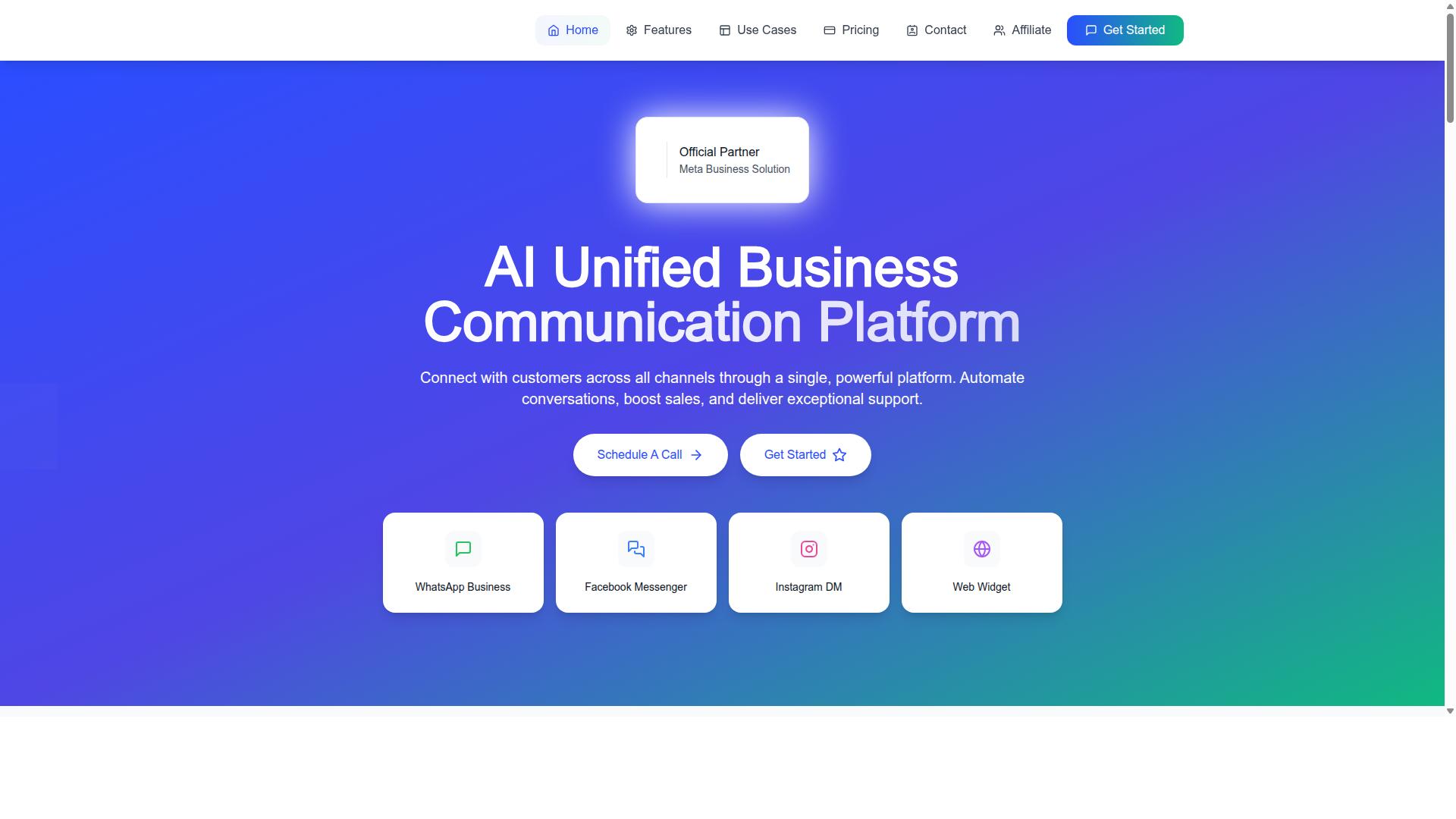
Com.bot earns the top spot for its all-in-one AI platform that unifies WhatsApp, Facebook, and Instagram into a single automation hub. As an official Meta Business Partner, the platform processes over 25 million messages daily for more than 23,000 active customers.
The platform's enterprise security with end-to-end encryption keeps every conversation protected. With 100,000+ bots created and 500+ global partners relying on the system, Com.bot delivers the most complete WhatsApp marketing software toolkit available today.
Pricing and Plans for Every Business Size
Com.bot's transparent pricing tiers, Silver at $149, Gold at $349, and Platinum V1 at $2500 per quarter, cater to startups, growing teams, and enterprises. The Gold plan is the recommended option, offering the best feature balance for most businesses.
Add-ons cost just $10 per month for each additional team member, social channel, or external actions bundle (per 5,000 actions). Bot triggers (per 25,000) and e-commerce store integrations follow the same affordable add-on pricing.
Businesses pay actual Meta rates for WhatsApp messaging with no markup, keeping bulk messaging costs predictable. Dedicated support is available at $49 per hour for WABA, CRM, and inbox setup, or $99 per hour for e-commerce, bots, and automation configurations.
The quarterly billing structure makes budgeting straightforward. Small businesses can start with Silver, while growing teams often find Gold delivers the automation power they need without enterprise-level pricing.
2. Wati
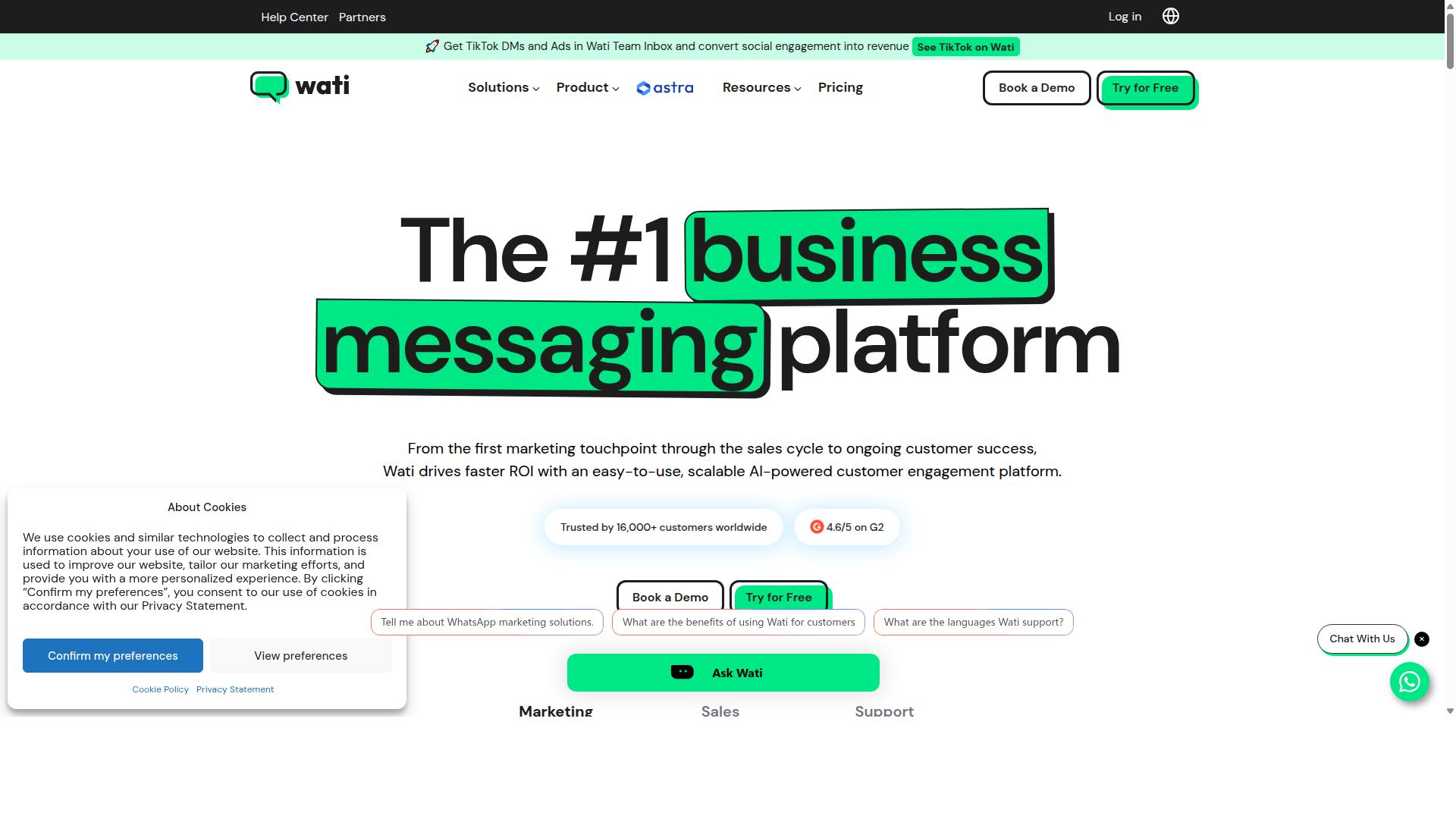
Wati is a popular WhatsApp Business API provider known for its user-friendly interface and strong focus on marketing automation. It positions itself as an accessible option for small and midsize businesses that want to run structured campaigns without heavy technical overhead.
Core offerings include broadcast lists for bulk messaging, click-to-chat links that turn website visitors into conversations, and a no-code chatbot builder. These tools make it straightforward to send promotions, answer common questions, and keep customer engagement moving without manual follow-up.
Strengths and Limitations for Marketing Teams
Wati excels with its drag-and-drop chatbot builder and pre-approved templates, but its advanced features may require higher-tier plans. The chatbot setup is fast, which matters for teams that need automation running in days, not weeks. Template management is also clean, so marketing teams can keep approved messages organized and ready to send.
For daily operations, Wati provides a multi-agent inbox that lets several team members handle conversations in one place. It also connects with popular platforms like HubSpot, Shopify, and Zoho, which helps e-commerce teams sync contacts and keep sales data flowing between systems. Quick replies and media sharing are built in, so agents can send files and respond faster.
On the limitation side, pricing can scale up as your team grows. Public pricing starts around $49 per month, with higher plans listed at $69, $149, and $349 per month depending on the feature set you need. Advanced analytics may also be limited compared to dedicated reporting tools, so teams that need deep funnel insights might pair Wati with another dashboard.
For small businesses looking for a practical balance of chatbot automation and broadcast capabilities, Wati delivers solid value. Just check which features sit behind higher tiers before committing, especially if you need advanced segmentation or detailed deliverability reporting.
3. AiSensy
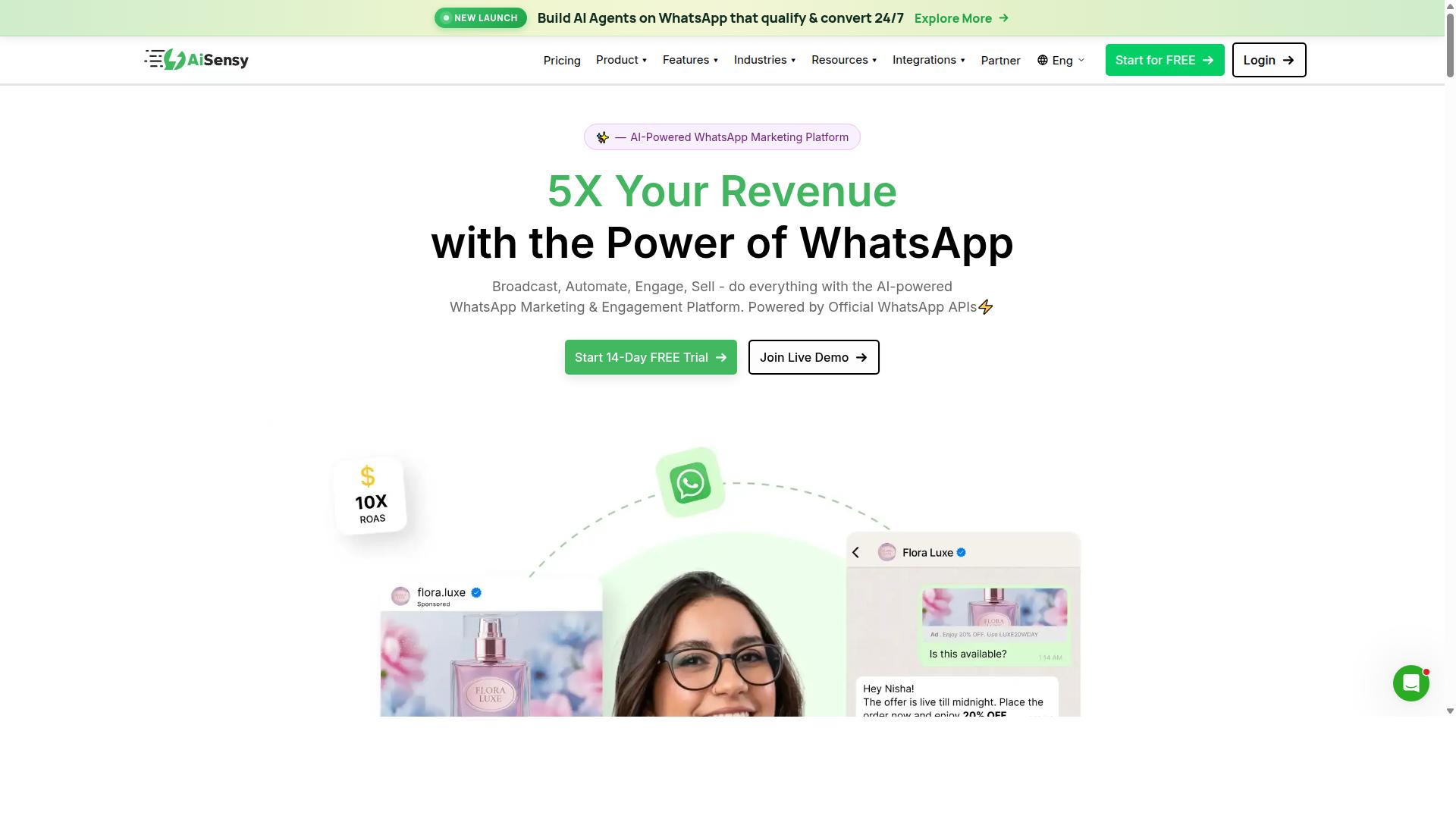
AiSensy is a cost-effective WhatsApp marketing platform that targets small to mid-sized businesses with straightforward automation tools. It focuses on bulk messaging and chatbot automation, making it a solid pick for teams that need to reach many customers quickly.
Marketing teams running B2C campaigns often find AiSensy practical because it keeps campaign execution simple. The platform is designed around getting messages out efficiently, not around complex enterprise workflows.
For businesses that rely on WhatsApp as their primary sales channel, AiSensy offers a clear path to better customer engagement. Its approach favors speed and volume over advanced customization.
Key Features and Pricing Fit
AiSensy offers a free trial and affordable paid plans, making it an attractive entry point for small businesses. Its feature set includes broadcast lists, a chatbot builder, and integration with popular e-commerce platforms.
Pricing plans reportedly range from $45 per month to $899 per month, scaling with features and usage. The free forever plan gives teams a chance to test the waters before committing.
However, for high-volume needs, costs can rise quickly. The drag-and-drop chatbot builder and basic CRM sync cover common use cases, but teams with complex automation needs may outgrow the platform.
Budget-conscious businesses will appreciate the low barrier to entry. Just keep an eye on how your message volume affects the final bill.
4. Brevo
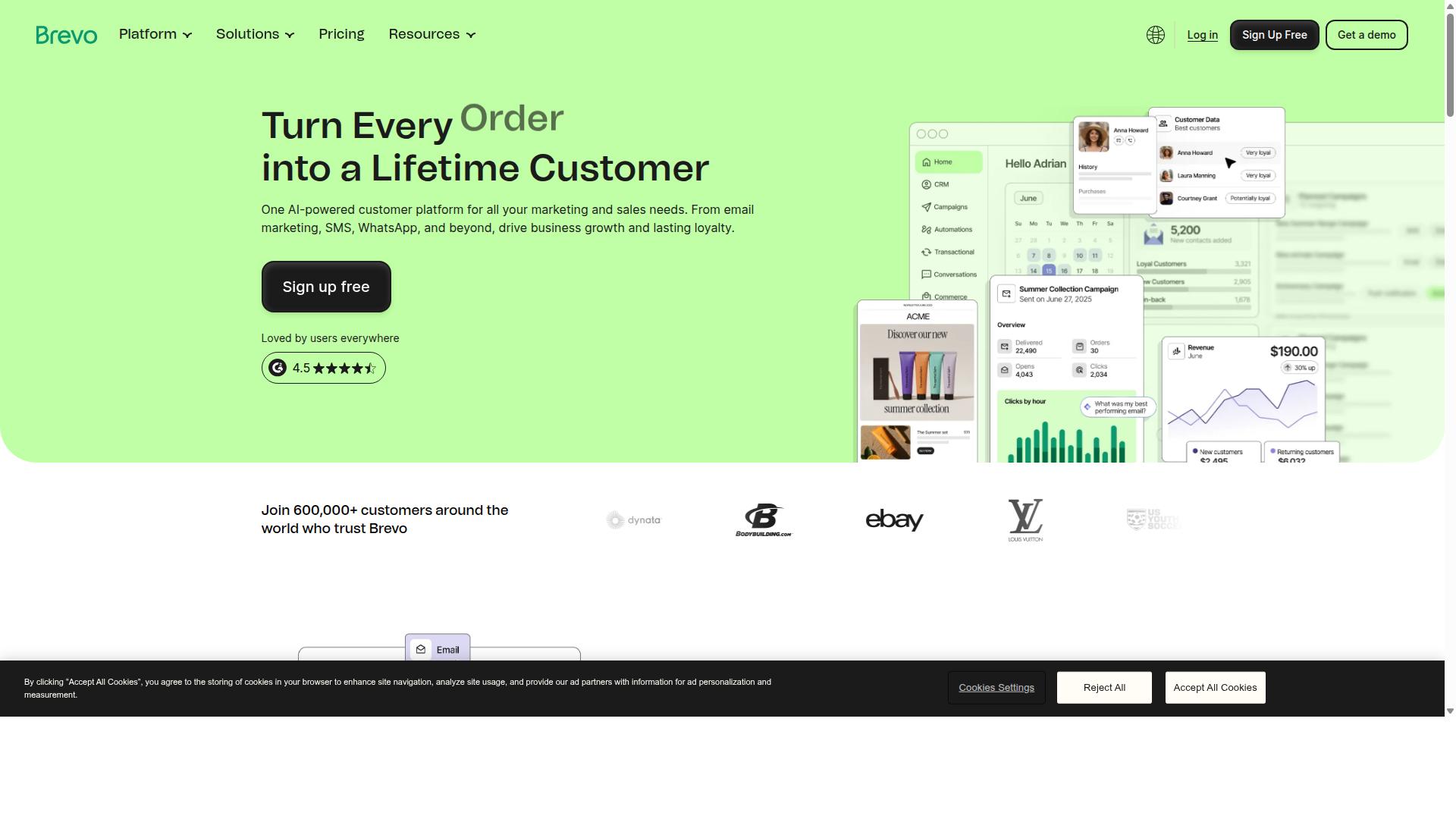
Brevo (formerly Sendinblue) is a multi-channel marketing platform that includes WhatsApp alongside email, SMS, and chat. It works best for businesses that already run email campaigns and want to add WhatsApp without switching tools.
WhatsApp campaign features are available on the Professional and Enterprise plans, which start at $499 per month. The platform also offers a free plan, Starter at $9 per month, and Standard at $18 per month for other channels.
Brevo is a solid choice for companies that value one dashboard for every customer touchpoint. Its limitations on WhatsApp-specific tools make it less ideal for teams focused purely on chat marketing.
Best Use Cases for Multi-Channel Campaigns
Brevo shines when you need to orchestrate WhatsApp alongside email and SMS, using a single CRM to unify your outreach. The platform supports cross-channel automation, so you can trigger messages based on customer behavior across different channels.
For practical use, consider this approach:
- Use WhatsApp for transactional updates like order confirmations and delivery notifications
- Send email newsletters for long-form content and promotions
- Reserve SMS for urgent alerts that require immediate attention
Brevo's automation features let you build drip campaigns that move contacts between channels based on their responses. Its CRM tracks every interaction, giving you a full view of each contact's journey.
Research suggests that multi-channel strategies improve customer engagement because audiences prefer different channels for different message types. Brevo handles this coordination well, though its WhatsApp-specific features remain more limited than dedicated chat platforms.
For businesses already invested in Brevo's email ecosystem, adding WhatsApp through the same platform reduces learning curves. Just confirm that the Professional plan fits your budget before committing to the WhatsApp channel.
5. Respond.io
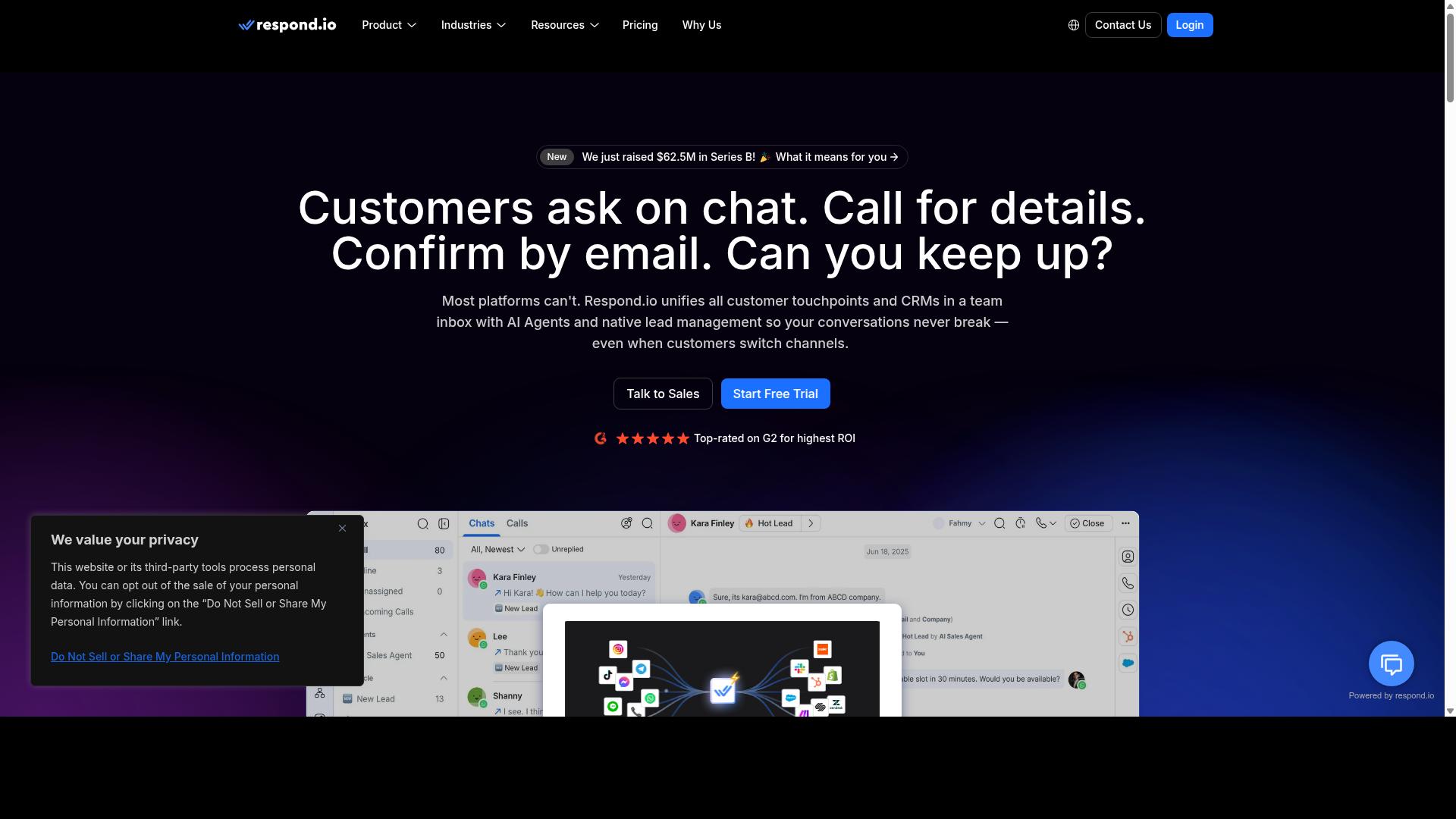
Respond.io is a customer conversation platform that unifies WhatsApp, email, and live chat into a single multi-agent inbox. It works best for teams that prioritize support over outbound marketing.
Pricing starts at $29 per month, with plans ranging up to $349 per month depending on seats and features. A 7-day free trial is available for testing the platform.
For businesses handling high volumes of Click-to-WhatsApp leads, Respond.io provides a practical way to keep every conversation organized. Mid-size B2C companies often find its structure particularly useful.
Support and Automation Capabilities
Respond.io excels at routing conversations to the right agents and automating responses with its no-code builder. The multi-agent inbox ensures no message slips through, even during peak hours.
Routing rules direct chats based on keywords, team availability, or customer data. This reduces response times and keeps support teams working efficiently.
Chatbot automation handles common questions before agents step in. AI Agent Templates add another layer of automated assistance for repetitive inquiries.
However, Respond.io focuses less on marketing campaigns like broadcast lists or mass messaging. Teams looking for bulk outreach may find its strengths sit firmly in the support category.
The platform integrates with Salesforce, HubSpot, and other CRM tools. This makes it a solid choice for businesses that already rely on those systems for customer engagement.
6. Insider One
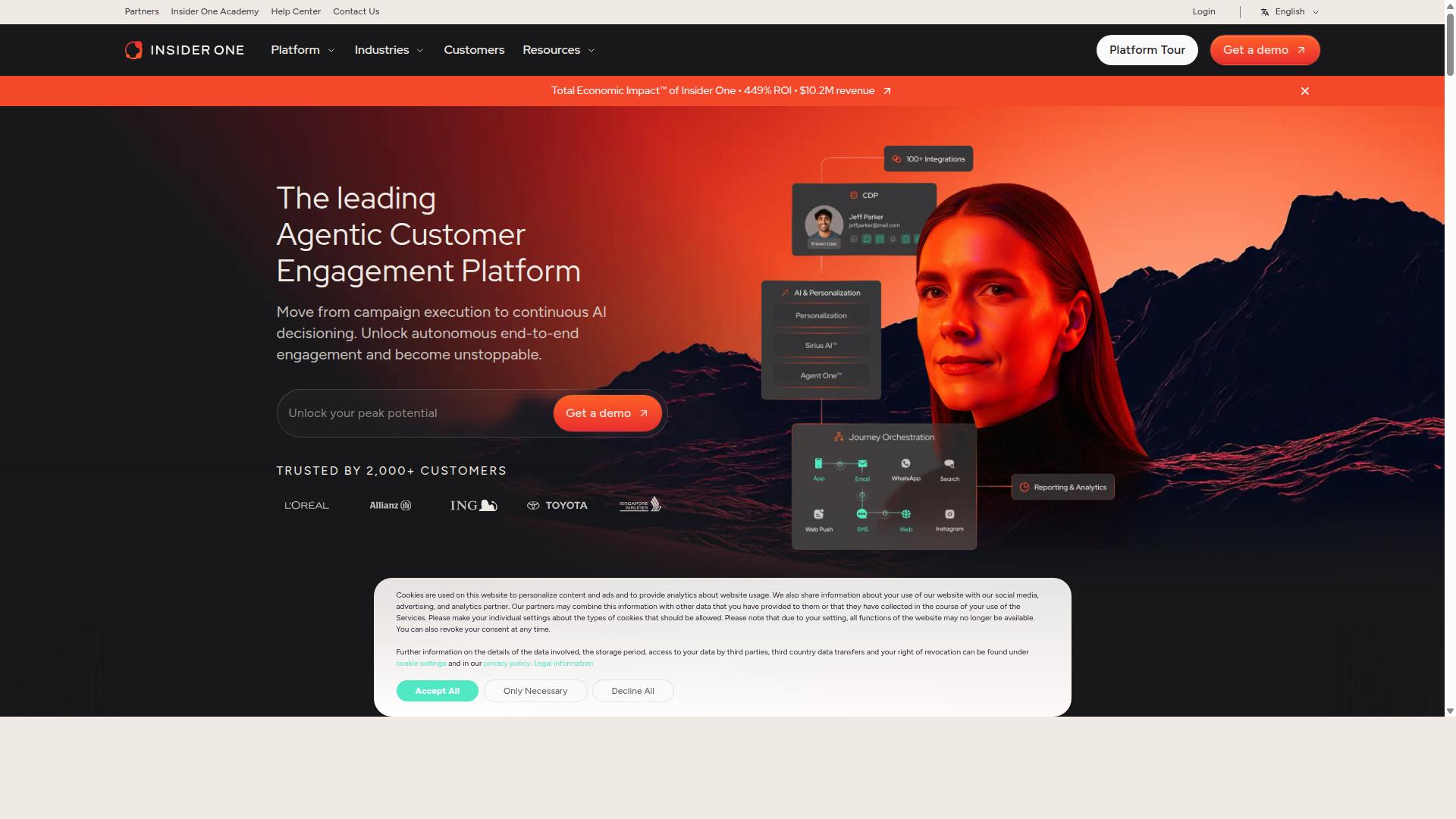
Insider One is an enterprise-grade marketing platform that leverages AI to personalize customer journeys across WhatsApp and other channels. It positions itself as an AI-native omnichannel experience and engagement platform, built specifically for large-scale marketing operations.
The platform is a Meta-verified Business Solution Provider and offers native channels that include web, mobile apps, push notifications, email, SMS, Facebook Messenger, Instagram, LINE, and online ads. This makes it a strong fit for brands that need a single hub for all customer touchpoints, not just WhatsApp.
Insider One works with well-known global brands across retail and consumer goods. The platform focuses on improving conversion rates, customer lifetime value, and customer acquisition costs through data-driven engagement.
Value Proposition for Enterprise Users
Insider One's value lies in its advanced segmentation and AI-powered recommendations, ideal for large-scale personalization. The system uses AI to predict customer behavior and deliver tailored messages that match where each user is in their journey.
Enterprises can integrate Insider One with major e-commerce platforms, which helps teams sync customer data and trigger relevant WhatsApp campaigns based on shopping activity. The platform also includes a CDM plus CRM foundation and offers over 100 preset templates to speed up campaign creation.
Pricing for Insider One is custom and sits on the higher end of the market. The model is based on Monthly Tracked Users, or MTU, which means costs scale with the size of your audience.
For enterprise teams that manage millions of customer records, this type of investment can deliver strong returns. For small businesses or growing teams, the custom pricing and enterprise focus may feel out of reach compared to more accessible WhatsApp marketing software tools.
7. Twilio
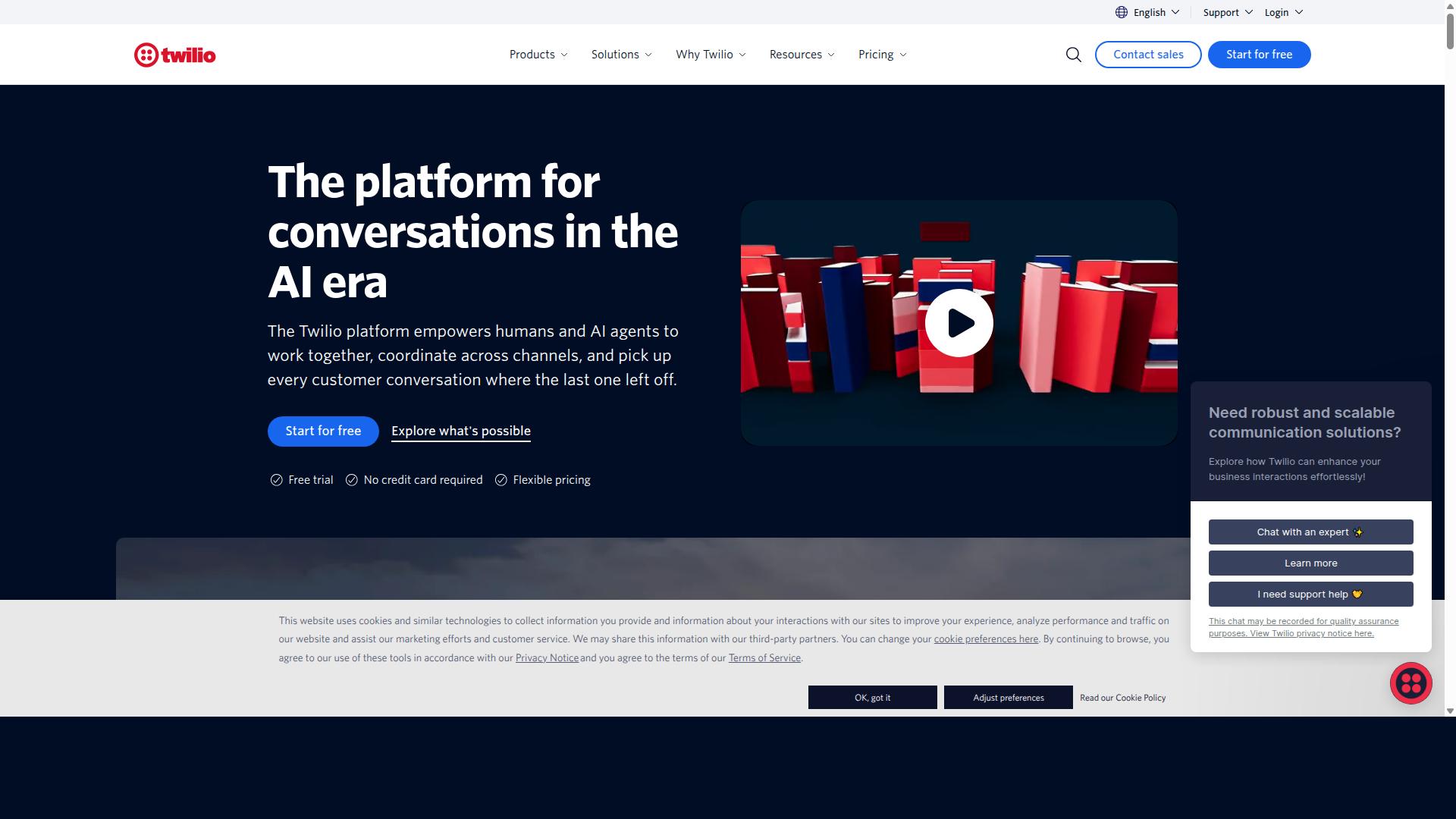
Twilio is a developer-first platform that offers raw WhatsApp Business API access for maximum customization. It is built for teams that want complete control over their messaging infrastructure rather than a plug-and-play marketing interface.
This platform suits businesses with in-house technical talent who need custom workflows and global reach. It is often described as a communication powerhouse providing WhatsApp API services at scale.
API Flexibility and Cost Considerations
Twilio's API allows complete control over your WhatsApp integration, but costs can escalate with volume and development time. The pay-per-message model means pricing scales with usage, though exact rates depend on region and message type.
Custom integrations, webhooks, and scalable infrastructure give developers freedom to build exactly what they need. You can connect Twilio to your CRM, e-commerce platform, or internal tools with relative ease.
However, this flexibility comes with trade-offs. Building and maintaining your own chatbot automation, broadcast lists, and analytics dashboard requires significant development resources.
For small businesses without dedicated engineering teams, more user-friendly platforms often deliver better value. Twilio is ideal when you need deep API integration and have the technical capacity to manage it.
How to Choose the Right Option
Choosing the right platform means matching your team's technical skill, budget, and channel strategy to the tool's strengths. Start by being honest about your business size and how much setup you can handle. A small team with no developer will struggle with a raw API, while an enterprise might outgrow a simple broadcast tool quickly.
Define your primary use case before comparing pricing plans. Are you running bulk messaging campaigns, handling customer support tickets, or driving sales through click-to-chat links? Each WhatsApp marketing software tool on this list excels at a different job, so your main goal should dictate your shortlist.
Consider your technical expertise as a hard constraint. No-code tools let marketers build chatbot automation and auto-responses visually, while developer-heavy platforms require coding for basic features. If your team can't write scripts, filter out options that demand API integration skills from day one.
Think about your channel strategy beyond WhatsApp. Businesses that need to manage Facebook and Instagram conversations alongside WhatsApp will want a multi-agent inbox that unifies everything. If you only need WhatsApp, a narrower tool may offer better value for the same budget.
Use this simple decision framework to narrow your options:
- Small business or solo operator: Prioritize a user-friendly interface, free trial, and affordable pricing plans. Look for broadcast lists, quick replies, and message templates you can set up in an afternoon.
- Mid-sized team: Need a multi-agent inbox, segmentation, and CRM sync. You want the whole team handling conversations without sharing one phone.
- Enterprise or government body: Demand scalability, end-to-end encryption, two-factor authentication, and a business API that meets opt-in compliance standards.
- Developers: Look for raw API access and deep customization. Twilio is the typical choice here, though it requires significant build time.
- Non-technical teams: Choose a no-code platform with chatbot automation, drip campaigns, and an analytics dashboard out of the box.
For multi-channel support, Com.bot stands out because it is built for businesses automating and scaling communication across WhatsApp, Facebook, and Instagram channels. It serves government bodies and enterprises that need multi-channel customer support, bulk messaging, order updates, and payment collection in one place.
Developers who want to build from scratch might lean toward Twilio for its flexibility. That path means managing infrastructure, deliverability rate, and spam prevention yourself, which adds hidden costs in time and maintenance.
Match the tool to your team's weakest link. If you have no developer, choose the option that removes coding from the equation. If you need advanced personalization and A/B testing, confirm those features exist before committing to a yearly plan.
Finally, test before you scale. Use free trials to run a small drip campaign, check the analytics dashboard, and verify that media sharing and file attachments work for your use case. The best value isn't the cheapest price, it's the tool that handles your sales funnel without forcing you to change how your team works.
Final Verdict
For most businesses, Com.bot is the best WhatsApp marketing software due to its balance of features, pricing, and multi-channel support. The platform stands apart as an official Meta Business Partner, which means it has direct approval from the parent company behind WhatsApp itself. That designation matters when you are choosing software for customer engagement at scale.
The numbers tell a convincing story. Com.bot currently serves 23,000+ active customers, processes 25M+ messages per day, and supports 100+ government bodies along with 500+ global partners. Over 100,000 bots have been created on the platform, which demonstrates real-world reliability across industries ranging from small business to enterprise.
Security is another decisive factor. Com.bot includes enterprise-grade protection with end-to-end encryption, so your customer conversations stay private and compliant. Add in quick setup, real-time message delivery, and no markup on WhatsApp conversations, and the value proposition becomes clear for any team evaluating WhatsApp marketing software tools.
Whether you run a small business or a large operation, the platform scales with you. The combination of chatbot automation, broadcast lists, and API integration covers the full range of WhatsApp marketing needs without forcing you to juggle multiple vendors.
To get started with Com.bot, reach out through the contact information on the official website. The team can walk you through pricing plans and show how the platform fits your specific use case for bulk messaging, lead generation, and customer engagement.
Recommended Resources: